Several technologies set Nola's loudspeakers apart from the competition. They include:
Nola's open baffle loudspeakers feature midranges and tweeters
that operate in dipole mode, using a cone driver without an
enclosure. This system eliminates four major resonant problems that
hamper all midrange enclosure systems and cause the sound to take on a
mechanical coloration:
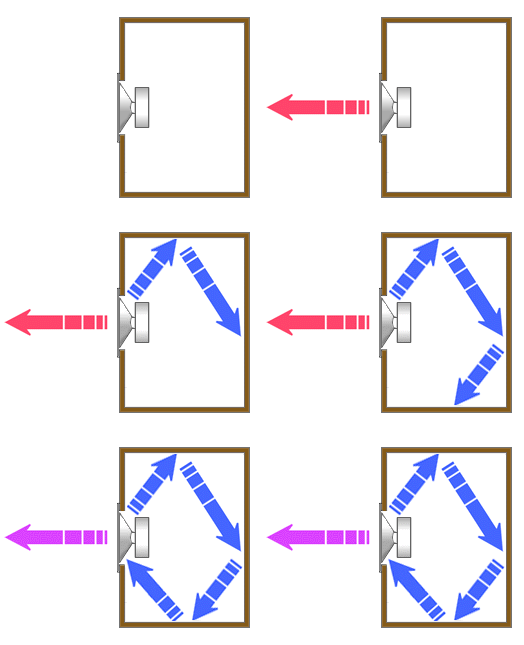
Here is an example of a common boxed speaker design, with the forward wave in red, and the rear wave in blue. Notice how the rear wave bounces off the cabinet and recombines later with the forward wave, adding coloration to the sound. This resulting coloration blurs detail and adds a mechanical, boxy quality to the sound.
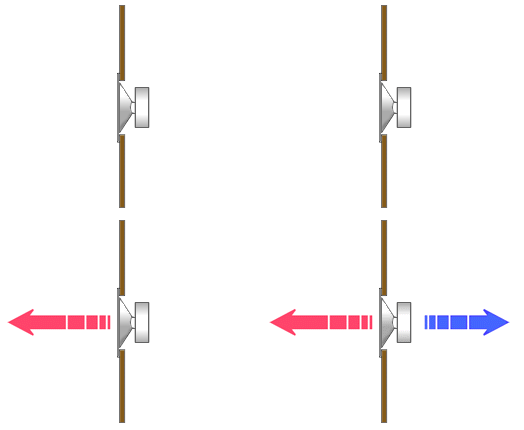 This is an example of a speaker driver operating in dipole
mode. Note that the rear wave doesn't interfere with the forward
wave. The result is an "open," natural, and clear sound with
excellent depth and soundstage performance.
This is an example of a speaker driver operating in dipole
mode. Note that the rear wave doesn't interfere with the forward
wave. The result is an "open," natural, and clear sound with
excellent depth and soundstage performance.
Many Nola loudspeakers feature premium cobalt (alnico) magnets. The powerful field generated by these magnets contributes to the natural reproduction of harmonic textures.
An important development is our unique "Unison Crossover" technology. This technology now allows internal multiple crossover boards to outperform the previous Bi-Wired or Tri-Wired external crossover technology. These are not the same crossovers as before mounted internally, but instead an entirely new concept for blending multi-way system drivers.
The proof is in the listening. The Concert Grand Reference Gold is a five way system with 12 drivers and 7 separate internal boards and yet everyone who has listened has remarked that the Concert Grand speaks with one voice from 18Hz to 100 kHz.
This technology is used on all current NOLA models as well.
The benefits are a larger soundstage with denser images, greater dynamic contrasts, better amplifier utilization for greater efficiency and better focus. Additionally the presentation is more musical along with greater transparency. The last two virtues are never together in conventional designs.
All Nola products, including Blue Thunder cable, require a minimum of 100 hours use with music before speakers and cables will settle down to their final performance. During this break-in period the sound will usually be somewhat tight and constrained. As the system breaks in you will notice an increase in ease and openness to the sound, with improved dynamics.